Tuesday, 10 September 2024

Indian English Drama: A Comprehensive Overview


Hello, I am Himanshi Parmar. This blog I have written as a part of teaching. The blog is written to provide study materials to my students. In this blog, i am going to discuss 'Indian English Drama: A Comprehensive Overview' in details.


 Introduction

Indian English drama, though initially overshadowed by other literary forms like poetry and prose, has carved a niche for itself through its unique blend of Western dramatic structures and Indian themes. The genre has evolved significantly from its early roots in the 19th century to its contemporary manifestations, reflecting the socio-political changes and cultural complexities of India. This comprehensive overview explores the origin, development, major dramatists, significant works, and recurring themes of Indian English drama.


Origin and Early Development


The journey of Indian English drama began in the 19th century, a period marked by the introduction of English education in India. This era saw the establishment of English-language theaters in major cities such as Calcutta (now Kolkata), Bombay (now Mumbai), and Madras (now Chennai). Despite the initial challenges of language barriers and the perceived artificiality of dialogue, Indian dramatists began to experiment with English as a medium for expressing Indian narratives.


One of the earliest recorded plays is Krishna Mohan Banerji’s "The Persecuted" (1831), which tackled the conflict between orthodox Hindu customs and the emerging Western ideas introduced by British colonizers. This play set the stage for subsequent works that would address similar cultural and social conflicts.


 Pre-Independence Era


During the pre-independence period, Indian English drama saw contributions from several notable playwrights who utilised the medium to address various social, cultural, and political issues.


1. Rabindranath Tagore


Rabindranath Tagore, a Nobel laureate in Literature, was a multifaceted genius who significantly contributed to Indian English drama with his poetic and symbolic plays. His major works include "Chitra" (1892), a lyrical drama from the Mahabharata about the warrior princess Chitrangada who transforms herself to win Arjuna's love, exploring themes of identity and societal roles; "The Post Office" (1912), an allegory about a sick boy named Amal who dreams of freedom and the world outside, addressing themes of liberation and the human spirit; and "Red Oleanders" (1925), a symbolic critique of industrialization and dehumanisation, where the protagonist Nandini leads a resistance against exploitation. Tagore's plays skillfully blend traditional Indian elements with modernist themes, delving into philosophical questions about identity, freedom, and human nature, and his use of rich poetic language and symbolism has made his works enduring masterpieces in Indian literature.


2. Sri Aurobindo


Sri Aurobindo, a philosopher, poet, and nationalist, brought a unique blend of Indian and Western influences to Indian English drama, drawing heavily from romantic and Elizabethan traditions. His major works include "Perseus the Deliverer" (1907), a retelling of the Greek myth of Perseus infused with philosophical and spiritual themes of heroism, destiny, and the triumph of good over evil, characterised by its lyrical quality and rich imagery; and "Vasavadutta," which showcases his romantic style and deep exploration of spiritual and philosophical questions. Aurobindo's plays are noted for their lyrical language, romantic elements, and profound exploration of spiritual themes, making significant contributions to Indian literature. His ability to intertwine Indian cultural elements with Western literary traditions has left a lasting impact on Indian drama, addressing cultural, social, and political issues through a deeply philosophical lens.


3. T. P. Kailasam


T. P. Kailasam, often hailed as the "Father of Modern Kannada Drama," made significant contributions to Indian English drama with his insightful plays that delve into social issues and human psychology. His major works include "The Purpose" and "Fulfilment," both of which are celebrated for their critical examination of societal norms and the human condition. "The Purpose" (1944) is a poignant play that explores the moral dilemmas and existential struggles faced by its characters, shedding light on the conflict between personal desires and societal expectations. "Fulfilment" (1949), on the other hand, addresses themes of human ambition and the quest for self-actualization, portraying characters who strive to find meaning and satisfaction in their lives. Kailasam's plays are known for their sharp critique of societal hypocrisies and the pressures imposed by rigid social structures. Through his compelling narratives and well-drawn characters, he adeptly highlights the complexities of human emotions and relationships. Kailasam's ability to combine humor with serious social commentary made his works both entertaining and thought-provoking, ensuring his legacy as a pioneering figure in Indian drama. His contributions have left a lasting impact on the landscape of Indian theatre, inspiring subsequent generations of playwrights to tackle social issues with a similar depth and sensitivity.


Other significant contributors during this period include Michel Madhusudan Dutt, A. S. P. Ayyar, Bharati Sarabhai, and J. M. Lobo Prabhu, each bringing their unique perspectives to the genre. Their works ranged from social reform and political satire to cultural critique and philosophical inquiry.


Post-Independence Era


The post-independence era marked a period of expansion and international recognition for Indian English drama. Playwrights began to gain acclaim not only within India but also on the global stage.


1. Asif Currimbhoy


Asif Currimbhoy’s diverse body of work includes plays like "Goa" and "Refugee," which address political conflict, social issues, and cultural displacement. His plays are known for their realistic portrayal of contemporary Indian society and their critical perspective on political events.


2. Pratap Sharma and Gurucharan Das


Pratap Sharma and Gurucharan Das both playwrights achieved success with their works being staged in England and America. Their plays brought Indian themes to a global audience, highlighting the universal relevance of Indian narratives.


 Major Themes


Indian English drama is rich with diverse themes that reflect the multifaceted nature of Indian society. Some of the major themes include:


1. Social and Political Issues


Indian English drama often talks about social and political problems, reflecting India's history and social changes. Many plays criticize colonialism, showing how Indians struggled against British rule. They also focus on social reform movements like fighting caste discrimination and advocating for women's rights. These dramas depict the efforts of people trying to make society fairer and often question the current social system, urging change and improvement.


2. Cultural Conflicts


A common theme in Indian English drama is the clash between traditional Indian values and Western influences. Playwrights explore how individuals and societies deal with the challenges of maintaining their traditions while adapting to modern, Western ways of life. Characters often face dilemmas about identity and belonging as they try to balance old customs with new ideas. These stories highlight the difficulties and opportunities that come with cultural change in a globalised world.


3.Philosophical and Psychological Exploration


Indian English drama is also known for exploring deep philosophical and psychological themes. Many plays delve into the complexities of the human mind, looking at existential questions and moral dilemmas. Characters in these dramas often face profound questions about who they are and the purpose of their lives. The plays use symbolic and poetic language to express these internal struggles, encouraging audiences to think deeply about the bigger questions in life and understand the human condition better.


Major Works


1. "Tughlaq" by Girish Karnad (1964)


"Tughlaq," published in 1964, is a historical play about Sultan Muhammad bin Tughlaq, who ruled in 14th-century India. The story focuses on his bold yet problematic decisions, like moving the capital from Delhi to Daulatabad, which leads to chaos and disappointment. The play's main themes are the clash between idealism and reality, the corruption of power, and political commentary. Even though it is set in medieval India, it also reflects on political disillusionment in post-independence India. Karnad effectively combines historical events with timeless political themes, making "Tughlaq" a significant work in Indian English drama.


2. "Hayavadana" by Girish Karnad (1971)


Published in 1971, "Hayavadana" is a unique play that mixes Indian folklore, mythology, and deep questions about life. The main story is about two friends, Devadatta and Kapila, who magically switch heads, leading to an exploration of identity and human nature. There's also a subplot about Hayavadana, a man with a horse’s head who wants to become fully human. The play discusses themes of identity, completeness, and the conflict between tradition and modernity. "Hayavadana" uses traditional stories to address deep questions about who we are, showing Karnad’s skill in blending complex themes with familiar tales.


 3. "Silence! The Court is in Session" by Vijay Tendulkar (1967)


First staged in 1967, "Silence! The Court is in Session" is a powerful social commentary on the hypocrisies and injustices in Indian society. The play is about a mock trial conducted by amateur actors, where the main character, Miss Leela Benare, is accused of infanticide. Tendulkar uses this trial to reveal societal prejudices, gender discrimination, and moral rigidity. The play's main themes are social justice, individual freedom, and societal hypocrisy. Set in post-independence India, it critiques conservative and patriarchal norms, highlighting the oppression women face. Tendulkar’s sharp portrayal of societal flaws makes this play a significant work in Indian English drama.


 4. "Final Solutions" by Mahesh Dattani (1993)


Published in 1993, "Final Solutions" is a modern play that deals with communal tensions and identity issues in India. The story takes place during a communal riot and follows a Hindu family who shelters two Muslim boys. The play explores themes of religious intolerance, generational conflict, and identity. Set against the backdrop of communal violence in modern India, it critically examines prejudice and mistrust. Dattani’s work is notable for addressing sensitive social issues, making "Final Solutions" an important piece in contemporary Indian English drama.


5. "Evam Indrajit" by Badal Sircar (1963)


First published in 1963, "Evam Indrajit" is an existential play reflecting the disillusionment of the post-independence generation. The story is about Indrajit, a young man struggling to find meaning and purpose in a monotonous and conformist society. The play's themes include existential angst, identity crisis, and societal expectations. Set in newly independent India, the narrative captures the sense of frustration and disappointment experienced by the youth. Sircar’s innovative use of non-traditional theatrical techniques and his focus on psychological depth make "Evam Indrajit" a pioneering work in Indian English drama.


 Conclusion


Indian English drama, despite its relatively late start and initial challenges, has evolved into a dynamic and influential genre. It continues to reflect the socio-political changes, cultural complexities, and diverse voices of India. From its colonial origins to its contemporary expressions, Indian English drama remains a powerful medium for artistic expression and social commentary, bridging the gap between traditional Indian narratives and modern literary forms.


Monday, 9 September 2024

The Renassiance in India


Hello, I am Himanshi Parmar. This blog I have written as a part of teaching. The blog is written to provide study materials to my students. In this blog, i am going to discuss Indian Renassiance in detail.


Introduction :

The Indian Renaissance was a time of cultural and intellectual awakening in the 19th and early 20th centuries in India. This period saw a revival of art, culture, and literature, influenced by both traditional Indian values and Western ideas introduced during British rule. Indian writing in English was important during this time, helping to share ideas and criticise social issues.


Historical Background


1. British Influence: The British brought English education to India, which helped many Indians climb the social ladder and engage in intellectual activities. Schools like the University of Calcutta (founded in 1857) became important centers for English learning.


2. Social Reform Movements: Many social reform movements began during this period, addressing issues like caste discrimination, women's rights, and education. Leaders like Raja Ram Mohan Roy, who wrote in English, fought against practices like Sati (the burning of widows) and promoted modern education.


 Early Indian English Writers


1. Raja Ram Mohan Roy (1772-1833): Known as the "Father of the Indian Renaissance," Roy wrote in English to promote social reforms and rational thinking, blending Indian and Western philosophies.


2. Henry Louis Vivian Derozio (1809-1831): A poet and teacher, Derozio was one of the first Indian poets to write in English. His work reflected a mix of romanticism and revolutionary ideas inspired by the changes happening around him.


3. Michael Madhusudan Dutt (1824-1873): Initially writing in English, Dutt later wrote in Bengali. His poetry, influenced by his English education and Western poets, was important in Indian English literature.


 Themes  and Characteristics


1. Nationalism and Identity: Writers explored themes of national pride and resistance to British rule, expressing their Indian heritage and criticising British policies.


2. Social Issues: Literature from this period addressed social issues like caste discrimination, women's rights, and the need for education reforms. English was used to reach a wider audience, both in India and abroad.


3. Cultural Mixing: Indian English literature during the Renaissance mixed Eastern and Western literary traditions. Writers experimented with different styles and content, combining Indian themes with Western forms.


 Important Works and Authors


1. Bankim Chandra Chatterjee (1838-1894): Though mainly a Bengali writer, Chatterjee's works like "Anandamath" were influential. His novel "Rajmohan's Wife" (1864) is considered the first Indian novel written in English.


2. Torulata Dutt (1856-1877): A pioneering poet, Dutt wrote in both English and French. Her collection of poems, "A Sheaf Gleaned in French Fields" (1876), and her novel "Bianca or The Young Spanish Maiden" (published after her death in 1878) show her literary talent.


3. Romesh Chunder Dutt (1848-1909): A historian, economist, and writer, Dutt's works like "The Lake of Palms" (1902) and his translations of the "Mahabharata" and "Ramayana" into English were important contributions.


 Legacy and Impact


1. Foundation for Future Writers: These early writers set the stage for future Indian English writers like Rabindranath Tagore, R.K. Narayan, and Mulk Raj Anand, who continued to explore Indian themes in English.


2. Cultural Bridge: Indian English literature served as a bridge between India and the West, fostering understanding and dialogue.


3. Global Recognition: This period marked the beginning of international recognition for Indian writers, paving the way for contemporary authors to gain global acclaim.


Watch this video on Indian Renassiance to know more about it.


Thus to conclude, The Indian Renaissance was a transformative time in India's history, and Indian writing in English played a key role in shaping the intellectual and cultural landscape. It was a time of great literary experimentation and social engagement, leading to the rich tradition of Indian English literature we see today.


Thursday, 25 April 2024

Types Of Comedy - Dark Comedy and Light Comedy


Hello, I am Himanshi Parmar. This blog I have written as a part of teaching. The blog is written to provide study materials to my students. In this blog, i am going to discuss about two major types of comedy - 1) Dark Comedy and 2) Light Comedy. Also provided examples of it.

Types of comedy

1] Light Comedy

Meaning

Light comedy is like a cheerful, sunny day in the world of humour. It's all about making people laugh without getting too serious or deep. Imagine a comedy movie that leaves you smiling and feeling good afterward.

Light comedy is designed primarily to entertain and amuse the audience through lighthearted and comedic elements. It focuses on creating laughter and a positive, feel-good atmosphere without delving into serious or dark themes. The humour in light comedy often arises from amusing situations, witty dialogue, and playful interactions among characters.

What Makes Light Comedy Different?

Funny Situations: Light comedies create humour from everyday situations. It's like watching your neighbour trying to walk their dog but ending up chasing it around the yard instead!

Witty Jokes: The characters crack jokes that are clever and light-hearted. Think of puns, wordplay, or funny misunderstandings that lead to laughter.

No Heavy Stuff: Unlike serious movies or dramas, light comedy doesn't deal with sad or dark topics. It's all about fun, love, friendships, and the silly things we do in life.

Feel-Good Vibes: The overall feeling of light comedy is happy and positive. It's like a burst of laughter that brightens your day.

Tone and Feel: Light comedy is happy and fun. It's about funny situations and clever jokes that make you smile. The mood is light and cheerful.

What it's About: It talks about love, friendships, and everyday life. It's not serious or sad. Instead, it's about funny things that happen in normal life.

Tone and Atmosphere:

Light comedy, also known as comedy of manners or romantic comedy, typically has a cheerful and upbeat tone. It focuses on humorous situations, witty dialogue, and amusing characters without delving into darker or serious themes. The atmosphere is often light-hearted, and the humour is meant to entertain and amuse the audience.

Themes and Content:

Common themes in light comedy include love, relationships, social status, and everyday life situations. The humour often arises from misunderstandings, romantic entanglements, and comedic timing. The content is usually family-friendly and does not explore controversial or sensitive topics.

Examples

1] "Pride and Prejudice" by Jane Austen:

This classic novel is a perfect example of light comedy. It humorously explores the misunderstandings and romantic entanglements between Elizabeth Bennet and Mr. Darcy. The witty banter, social commentary, and delightful characters add a touch of light-heartedness to the story.

2] "The Importance of Being Earnest" by Oscar Wilde:

Wilde's play is a masterpiece of light comedy. It satirises the Victorian society's manners and customs through clever wordplay, absurd situations, and humorous misunderstandings. The characters, especially Algernon and Jack, engage in hilarious antics that keep the audience entertained.

3] "A Midsummer Night's Dream" by William Shakespeare:

Shakespeare's comedy is filled with magical elements, love triangles, and comical misunderstandings. The interactions between characters like Bottom, the weaver transformed into a donkey, and the fairy Puck's mischief add a whimsical and humorous tone to the play.

2] Dark Comedy


What is Dark Comedy? / Meaning of Dark Comedy:

Dark comedy is a type of humour that dives into topics that are usually considered serious, sad, or uncomfortable. Instead of making light of these issues, dark comedy uses humour to shed light on them in a witty, ironic, or satirical way.

Dark comedy is a type of humour that looks at serious or sensitive topics in a funny way. Imagine laughing at something you wouldn't normally find funny, like making jokes about death or serious problems. It's like finding humour in unexpected places.

Tone and Atmosphere:

Dark comedy, also known as black comedy or gallows humour, has a satirical and cynical tone. It delves into taboo subjects, uncomfortable truths, and often explores the darker aspects of human nature. The atmosphere can be unsettling or morbid, as it confronts serious issues with humour.

Themes and Content:

Dark comedy tackles controversial, sensitive, or taboo themes such as death, illness, violence, and social issues. The humour in dark comedy often comes from irony, absurdity, and juxtaposition of serious subjects with comedic elements. It challenges societal norms and often has a subversive or rebellious undertone.

What makes dark comedy different?

Serious Topics Made Funny: Dark comedy takes things like death, illness, or social issues and makes jokes about them. It's not making fun of these topics but finding humour in their absurdity or unexpectedness.

Irony and Satire: It uses irony, sarcasm, or satire to make jokes. This means saying the opposite of what's expected or poking fun at serious things to make a point.

Making You Think: Dark comedy isn't just about laughs. It also makes you think about deeper stuff while you're laughing. It challenges how we see things and makes us question societal norms.

Uncomfortable, Yet Funny: Sometimes, dark comedy can be a bit uncomfortable because it talks about serious stuff. But that's part of what makes it funny—it's like laughing at the unexpected.


Examples

1)"Slaughterhouse-Five" by Kurt Vonnegut :

"Slaughterhouse-Five" is a darkly comedic novel that follows Billy Pilgrim, a World War II soldier who becomes "unstuck in time" and experiences different moments of his life, including his time as a prisoner of war in Dresden during the Allied bombing. Vonnegut's use of dark humour is evident in his portrayal of the absurdity of war, time travel,and human behaviour in extreme situations. The novel's non-linear narrative and Billy's detached perspective create a surreal and satirical commentary on the horrors of war, blending tragedy with moments of dark comedy.

2)"The Catcher in the Rye" by J.D. Salinger

"The Catcher in the Rye" is a classic novel that combines elements of dark humour with themes of alienation and disillusionment. The protagonist, Holden Caulfield, navigates through a world he sees as phoney and hypocritical, often using sarcasm and wit to comment on society's flaws. Salinger's use of dark comedy lies in Holden's cynical observations, his encounters with eccentric characters, and his own internal struggles with depression and loneliness. The novel's blend of humour and melancholy captures the complexities of adolescence and the human condition.

(This answer is prepared with the help of chat GPT)

Tuesday, 16 April 2024

બુક પ્રતિભાવ : ટ્રેન ટુ પાકિસ્તાન - ખુશવંતસિંહ


બુક પ્રતિભાવ - ટ્રેન ટુ પાકિસ્તાન
લેખક - ખુશવંતસિંહ
અનુવાદક - જય મકવાણા
પ્રકાર - નવલકથા 

ખુશવંતસિંહ દ્વારા લખાયેલ અને જય મકવાણા દ્વારા અનુવાદિત 'ટ્રેન ટુ પાકિસ્તાન' એ ભારત - પાકિસ્તાનનાં વિભાજન વખતેની વ્યથા આલેખતી એક ઐતિહાસિક નવલકથા છે. 1947 માં થયેલ વિભાજન વખતે થઇ રહેલી હીજરતો, હીજરત વખતે આવતી મુશ્કેલીઓ,ચામડી બાળી નાખનારો ઉનાળો, વળી એ જ સમયે ફાટી નીકળેલ મરકી અને ઓછામાં પૂરું હિંસક હુલ્લડોનું વર્ણન રુંવાટા ઉભા કરી દેનારુ છે. પંજાબ સ્થિત મનોમાજરા ગામમાં નવલકથા શરુ થાય છે અને તેનું કથાવસ્તુ એ જ ગામની આસપાસ વણાઈને એક કરુણાંતિકા રચે છે.

મનોમાજરાના શીખ અને મુસ્લિમોની એકતા અને ભાઈચારાથી શરુ થયેલી નવલકથાનું કેન્દ્રબિંદુ ત્યારે ગામનું રેલવે સ્ટેશન બની જાય છે જયારે પાકિસ્તાનથી શીખોની લાશો ભરેલી એક ટ્રેન ત્યાં આવીને ઉભી રહે છે. આખું ગામ મરુભૂમિમાં ફેરવાય જાય છે. ગામ આખામાં ડરનો માહોલ ફેલાઈ જાય છે. લોકો અગાસી પર ચડીને આખો - આખો દિવસ સ્ટેશન તરફ જોઈ રહે છે. રાત્રે ગુરુદ્વારામાં ભેગા મળીને પોતાને આવનાર અંધકારમય ભવિષ્યમાંથી ઉગારી લેવાની અરદાજ લગાવે છે, પ્રાર્થના કરે છે. પણ ભાવિ કોણ ભાંખી શકે છે?!

 કોમી હુલ્લડો અંતે મનોમાજરા સુધી પણ પોહચી જાય છે, મનોમાજરાના દરેક મુસ્લિમોને ચંદનનગરના રેફ્યુજી કેમ્પમાં મોકલી દેવામાં આવે છે. જતા - જતા મુસ્લિમો રાત્રે મુશળધાર વરસાદમાં પોતાના પ્રિય શીખ પાડોશીઓ પાસે છેલ્લી વિદાઈ લેવા માટે જઈ રહ્યા છે.શીખો પણ પોતાના ગામભાઈઓની જમીનને હાથ અડાડવાની ના પાડીને તેમના ઉમદા ભાઈચારાનો પરિચય આપે છે. માત્ર મલ્લિ નામના એક બદમાશ શીખની ટોળી દ્વારા મુસ્લિમોના ઘરો, ઢોર, જમીન બધું જ લૂંટી લેવામાં આવે છે. વળી પોલીસની કૂટનિતિ પણ હુકુમચંદ અને સબઇન્સ્પેક્ટર ના પાત્રોથી સચોટ રીતે દેખાડાઈ છે.

 આ ઉપરાંત ડાબેરી વિચારધારા ધરાવતા ઇકબાલનું પાત્ર પણ ઘણું રસપ્રદ છે. આવા કપરા સમયમાં કોઈ અજાણ્યા ગામમાં આવીને સમજસુધારણા કરવાનો નિર્ણય કરીને તે મોટુ સાહસ વહોરે છે પરંતુ બીજા જ દિવસે પોલીસ દ્વારા તેને ગીરફતાર કરી લેવામાં આવે છે. સાથે જ ગીરફતાર થાય છે ગામનો એક નંબરી બદમાશ જગ્ગા. જે ખલનાયક તરીકે એન્ટ્રી કરીને અંતે હીરો તરીકે ઉભરી આવે છે. નવલકથાના અંતે શીખોના મોતનો બદલો લેવાના હેતુથી ભારતથી પાકિસ્તાન જતી, ખીચોખીચ મુસ્લિમોથી ભરેલી ટ્રેન માંના દરેક પેસેન્જરને મોતને ઘાટ ઉતારી દેવાનું ષડયંત્ર રચાય છે પરંતુ જગ્ગા પોતાના જીવના ભોગે એ મુસ્લિમો ભરેલી અને જેમાં તેની પ્રેમિકા નૂરા પણ સફર કરતી હતી તેવી ટ્રેનને વિનાશથી બચાવી લે છે. નવલકથા પૂર્ણ થઇ જાય છે પણ તેમાં કરવામાં આવેલ ભયાનક વર્ણનો ચેન છીનવી લેનારા છે.

નદીમાં તણાયને જતી અસંખ્ય લાશો, લાખોની સંખ્યામાં મડદા ઠાલવતી ટ્રેન, હીજરત કરીને જતા લોકો પર અચાનક થયેલા હુમલાથી પોતાનો જીવ બચાવવાં આમ - તેમ ભાગતા, કરગરતા, આજીજી કરતા ગરીબડા લોકો અને એવા પુરુષો કે જેના મા, બહેનો, દીકરીઓને તેમની જ નજર સામે નિર્વસ્ત્ર કરીને બજારમાં ફેરવવામાં આવતી હતી, જર, જમીન અને જોરુ આ ત્રણેય લૂંટાઈ રહ્યા હતા. ઘર ઉજડી ગયા હતા, બાપદાદાની મિલકતો, જમીન અરે સ્મૃતિઓ પણ પાછળ છોડીને લોકો વિરુદ્ધ દિશાઓમાં હીજરત કરી રહ્યા હતા. અડધા કુટુંબીઓ કપાઈ ગયા હતા, અડધા ક્યાંક પાછળ છૂટી ગયા હતા, પોતે ક્યારે કપાઈ જશે તે કહી શકાય એમ નહોતું. માથે લટકતી તલવાર અને લોહીથી ભીજાયેલી ભારતીય ઉપખંડની અડધી ધરતી, આવી વાસ્તવિકતાને જીરવવી અઘરી છે, વળી તેને શબ્દોમાં કંડારવી તો અતિશય અઘરી છે.ખુશવંતસિંહ એ આ કામ કર્યું અને તેને માતૃભાષા ગુજરાતીમાં ભાવ જળવાય રહે તે રીતે અનુવાદિત કરવાનું કપરું કામ કર્યું જય મકવાણાએ. વળી નવલકથાની વચ્ચે - વચ્ચે હીજરત સમયની માર્ગરેટ બૌર્ક - વ્હાઇટ દ્વારા લેવાયેલ કરુણ તસવીરો મૂકીને વિભાજનનો સમય વાચક સામે તાદ્રશ કરાયો છે. વાચકના મન પર એક ઊંડી છાપ પાડી જનાર આ નવલકથા ઇતિહાસનો એક એવું સમયચોસલું ઉજાગર કરે છે જેને જાણ્યા પછી, તેના લોકોની કથા વાંચ્યા પછી, ભાગ્યે જ કોઈ પોતાના નસીબ કે સમય વિશે ફરિયાદ કરી શકે.

- હિમાંશી પરમાર (માન)


Monday, 8 April 2024

Reported Speech - Direct and Indirect Speech


Hello, I am Himanshi Parmar. This blog I have written as a part of teaching. The blog was written to provide study materials to my students. In this blog, i am going to discuss about Reported Speech (Direct speech and Indirect Speech). The blog includes following sub points -

  • What is Reported Speech? /Meaning of Reported Speech.
  • How Reported Speech Works / Process of converting direct into Indirect speech.
  • Changes in Verb Forms in Reported Speech /Changes according to tenses.
  • Reporting Verbs and Conjunctions
  • Examples of Reported Speech
  • Uses and Importance of Reported Speech


What is Reported Speech? /Meaning of Reported Speech.


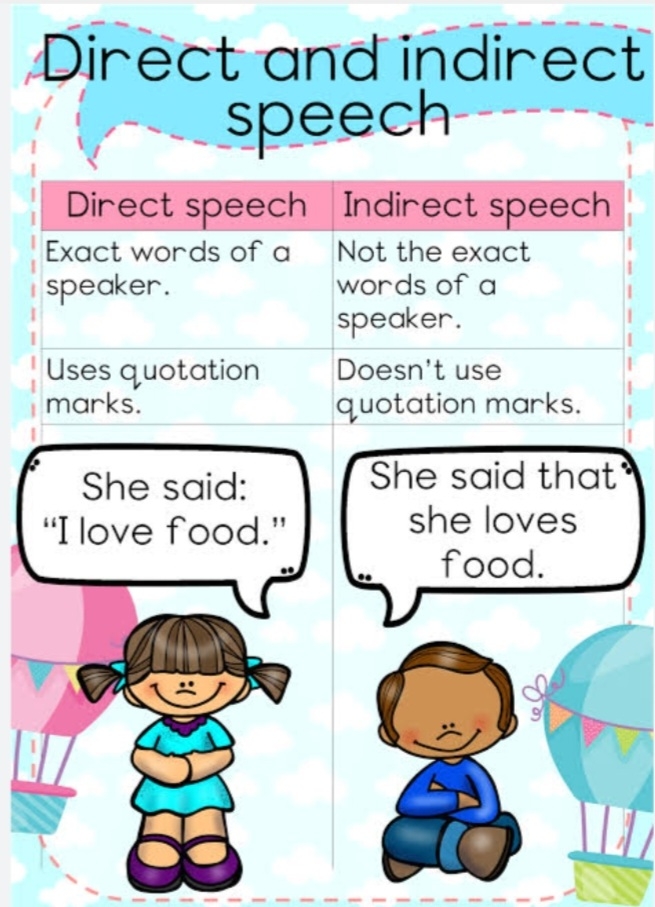
Reported speech, also known as indirect speech, is a way of reporting or conveying what someone else said without quoting their exact words. Instead of using quotation marks as in direct speech, reported speech transforms the original statement into a new sentence structure. This is commonly used in both spoken and written English to relay conversations, thoughts, or statements made by others.Here's a detailed explanation of reported speech:


How Reported Speech Works /Process of converting direct into Indirect speech


1] Reporting Verb: Reported speech typically begins with a reporting verb such as "said," "told," "asked," "explained," etc. This verb introduces that someone is speaking or has spoken.


2] Change in Pronouns and Verb Tenses:

  1. Pronouns: Pronouns usually change according to the perspective of the speaker in reported speech. For example, "I" becomes "he/she," "we" becomes "they," and so on.
  2. Verb Tenses: The verb tenses may also shift depending on when the original statement was made relative to the reporting verb. This is called backshifting.


3]Punctuation: Reported speech is not enclosed in quotation marks like direct speech. Instead, it is integrated into the sentence structure and typically separated by punctuation, such as commas or conjunctions.


Changes in Verb Forms in Reported Speech /Changes according to tenses


Present Simple → Past Simple:

Direct Speech: She said, "I work in an office."

Reported Speech: She said that she worked in an office.


Present Continuous → Past Continuous:

Direct Speech: He said, "I am studying for my exam."

Reported Speech: He said that he was studying for his exam.


Present Perfect → Past Perfect:

Direct Speech: They said, "We have visited Paris."

Reported Speech: They said that they had visited Paris.


Past Simple → Past Perfect:

Direct Speech: She said, "I bought a new car."

Reported Speech: She said that she had bought a new car.


Can → Could:

Direct Speech: He said, "I can swim."

Reported Speech: He said that he could swim.


Reporting Verbs and Conjunctions:


  1. Reporting Verbs: These verbs indicate the act of reporting and are essential in introducing reported speech. Examples include "said," "told," "asked," "explained," "stated," "mentioned," etc.
  2. Conjunctions: Conjunctions such as "that," "if," or "whether" are often used to introduce reported speech, especially when the reported speech is a statement or a question.


Examples of Reported Speech


Direct Speech: "I will come to the party," she said.

Reported Speech: She said that she would come to the party.


Direct Speech: "They are watching a movie," he told me.

Reported Speech: He told me that they were watching a movie.


Direct Speech: "Have you finished your homework?" she asked.

Reported Speech: She asked if I had finished my homework.


Uses and Importance of Reported Speech


1] Conveying Conversations: Reported speech allows us to summarize conversations or relay what someone else said in our own words.


2] Maintaining Formality: In formal writing or reporting, using reported speech instead of direct quotes can maintain a professional tone.


3] Avoiding Repetition: When recounting a conversation, reported speech helps avoid repeating long passages of direct speech.


4] Narrative Writing: In storytelling or narratives, reported speech is commonly used to describe dialogues between characters.


5] Backshifting for Accuracy: Backshifting verb tenses in reported speech ensures accuracy in conveying when the original statement was made relative to the reporting.


In conclusion, reported speech is a fundamental aspect of English grammar used to report what others have said. Understanding how to transform direct speech into reported speech is essential for effective communication and writing.


Click here to read my blog about Voices (Active Voice and Passive Voice)


I hope this blog is helpful to you. Happy learning!


References

https://images.app.goo.gl/hnuMLNgvW1Z4TexQ9

https://images.app.goo.gl/bp5ca1dMvB7FMCJL7

https://images.app.goo.gl/5u7eFTrx8YSk7QAR8

Voices - Active and Passive

Hello, I am Himanshi Parmar. This blog I have written as a part of teaching. The blog was written to provide study materials to my students. In this blog, i am going to discuss about 'Voices' (Active and Passive Voice). The blog includes following sub points - 
  • What is Voice of a verb?
  • Types of Voices of Verb
  • Rules/Process of Active – Passive Voice Conversions
  • Examples of Active – Passive Voice Conversions
  • Advantages of Passive Construction
  • Disadvantages of Passive Construction

What is Voice of a verb?

The voice of a verb expresses whether the subject in the sentence has performed or received the action.

Example:

Active : The watchman opens the door.
Passive : The door is opened by the watchman.

Types of Voices of Verb

Verbs have two voices (i) Active Voice (ii) Passive Voice

1] Active Voice – When an action performed by the subject is expressed by the verb, it is an active voice. Active voice is used when more straightforward relation and clarity is required between the subject and the verb.

Active Voice example:
Hens lay eggs.
Birds build nests.

2] Passive Voice – When the action expressed by the verb is received by the subject, it is passive voice. Passive voice is used when the doer of the action is not known and the focus of the sentence is on the action and not the subject.

Passive Voice Examples:
Eggs are laid by hens.
Nests are built by birds.

Rules for Active – Passive Voice Conversions

1] Identify the subject, verb, and object in the active voice sentence.

2] If the object of the active voice sentence is more important than the subject, consider converting to passive voice.

3] Change the object of the active voice sentence into the subject of the passive voice sentence.

4] Use the appropriate form of the verb "to be" (am, is, are, was, were) based on the tense of the active sentence.

5] Use the past participle form of the main verb as the main verb in the passive sentence.

6] Optionally, include the agent (the doer of the action) in the passive sentence using "by" if it is necessary or adds clarity.

The rules to form the passive voice in various tenses


Examples of Active – Passive Voice Conversions

Active: "The chef prepared a delicious meal."
Passive: "The delicious meal was prepared by the chef."

Active: "They are painting the house."
Passive: "The house is being painted by them."

Active: "She will bake a cake."
Passive: "A cake will be baked by her."

Active: "The company awarded him the contract."
Passive: "He was awarded the contract by the company."

Active: "Someone stole my bicycle.”
Passive: "My bicycle was stolen by someone.”


Advantages of Passive Construction

1] Emphasis on Action: Passive construction puts the focus on what is done rather than who does it. This can be useful when the action is more important than the doer.

2] Hiding the Doer: Sometimes, we don't want to mention who did something. Passive voice lets us keep the doer a secret or mention them indirectly.

3] Formal Writing: In formal writing, like in reports or academic papers, passive voice is common. It adds a tone of seriousness and professionalism.

Disadvantages of Passive Construction

1] Not Always Clear: Passive sentences can sometimes be confusing. It's not always clear who did the action unless we mention it explicitly.

2] More Words: Passive sentences are often longer than active sentences. This can make writing seem wordy or less straightforward.

3] Less Engaging: Passive voice can make writing less interesting because it doesn't show action directly. Active voice is usually more engaging and lively.

Watch this video for better understanding.


Click here to read my blog about REPORTED SPEECH

I hope this blog is helpful to you. Happy learning!

References

Monday, 11 March 2024

Animal Farm by George Orwell


Hello, I am Himanshi Parmar. This blog I have written as a part of teaching. The blog was written to provide study materials to my students. In this blog, i am going to discuss about a novella 'Animal Farm' by George Orwell. The blog includes following points Summary, About the Author, Themes, Symbols, 'Animal Farm' as a political Satire/Allegory etc.

About George Orwell

George Orwell, born Eric Arthur Blair in 1903, was a British writer known for his penetrating and often dystopian social and political commentary. With a keen eye for the complexities of power and language, Orwell's works, including "Animal Farm" and "Nineteen Eighty-Four," have become timeless classics that explore themes such as totalitarianism, oppression, surveillance, and the manipulation of truth. Orwell's own experiences, including his time as a colonial police officer in Burma and his involvement in the Spanish Civil War, profoundly influenced his writing, leading him to become a staunch advocate for democratic socialism and an outspoken critic of totalitarian regimes. His legacy as a writer is marked by his commitment to truth-telling, social justice, and the defense of individual freedoms, making him one of the most influential figures in 20th-century literature.
Summary

The story begins on Manor Farm, where Old Major, an aging boar, delivers a speech to the other animals, inspiring them to rebel against their human oppressors. He teaches them the song "Beasts of England," which becomes their anthem.

After Old Major's death, the animals, led by the pigs Snowball, Napoleon, and Squealer, stage a successful revolution against Mr. Jones, the farmer. They rename the farm Animal Farm and establish a new system based on equality and cooperation among animals.

As time passes, Napoleon seizes power, ousting Snowball and establishing a dictatorship with the help of the dogs he trained. He gradually becomes corrupt, forming alliances with humans and adopting their vices.

Squealer, Napoleon's propagandist, distorts facts and uses persuasive tactics to justify Napoleon's actions and maintain control over the other animals. The principles of Animalism, such as "All animals are equal," are twisted to suit Napoleon's desires.

The Seven Commandments, which outline Animal Farm's principles, are repeatedly revised to justify the pigs' increasing privileges. The animals, especially Boxer the horse and Benjamin the donkey, remain loyal but start to question the changes.

The pigs start walking on two legs, wearing clothes, and behaving like humans, symbolizing their transformation into the oppressive class they originally rebelled against. The other animals realize the extent of their betrayal but feel powerless to stop it.

Napoleon's regime becomes increasingly tyrannical, using fear and violence to maintain control. The farm's original ideals are completely abandoned, and the animals live in fear and oppression.

The pigs collude with humans and engage in trade, breaking the once-sacred principle of not engaging with humans. They also face external threats, such as neighboring farmers who view Animal Farm as a threat to their own power.

The novella ends tragically as the pigs become indistinguishable from humans, and the once-revolutionary farm now mirrors the oppressive society it sought to replace. The animals' hopes for a better life are shattered, leaving them disillusioned and defeated.

"Animal Farm" serves as a powerful critique of totalitarianism, political corruption, and the manipulation of language and ideology for control and power. Through its vivid portrayal of animal characters and their struggle for freedom, Orwell delivers a timeless warning about the dangers of unchecked authority and the perversion of revolutionary ideals.

Here is the film adaptation of the novella.


Animated Film based on 'Animal Farm' by Orwell.


Themes

1 - Totalitarianism:
Totalitarianism means when one person or a group has complete control and makes all the rules. In "Animal Farm," the pigs take over the farm and become the ruling class, just like the humans they overthrew. They control everything and make decisions without considering what's best for everyone. For example, Napoleon, one of the pigs, makes all the decisions and even changes the rules to benefit himself, showing how power corrupts.

2 - Corruption of Power:
This theme shows how having a lot of power can sometimes make people or animals selfish and cruel. In the book, the pigs start off wanting equality for all the animals, but as they gain more power, they become greedy and start treating the other animals unfairly. For instance, the pigs start living in the farmhouse and enjoying special privileges while the other animals work harder and suffer.

3 - Class Struggle:
Class struggle is about the conflict between different groups in society, like rich and poor or powerful and powerless. In "Animal Farm," the animals rebel against the humans because they're tired of being mistreated and want equality. However, the pigs end up becoming the new ruling class and treat the other animals just like the humans did before. This shows how revolutions can sometimes fail to bring about real change for everyone.

4 - Propaganda and Manipulation:
Propaganda and manipulation happen when someone spreads lies or twists the truth to control others. In the novel, the pigs use propaganda to control the other animals and keep them in line. For example, they change the commandments to make themselves look better and use fear tactics to silence any dissent among the animals. This shows how those in power can use deception to maintain their control.

5 - Loss of Identity and Individuality:
This theme is about how individuals can lose their sense of self and become like mindless followers when they're oppressed. In "Animal Farm," the animals lose their individuality as the pigs become more authoritarian. They stop thinking for themselves and just follow orders without questioning. For example, Boxer, the hardworking horse, keeps saying "I will work harder" without realizing that he's being exploited by the pigs.

6 - The Nature of Revolution:
Revolution means big changes in society, but sometimes these changes can make things worse instead of better. In the book, the animals revolt against the humans to achieve freedom and equality. However, their revolution is hijacked by the pigs, who end up becoming tyrants themselves. This shows how revolutions can be corrupted by those seeking power, leading to disappointment and betrayal.

7 - Societal Injustice and Hypocrisy:
This theme is about the unfairness and double standards in society, where leaders say one thing but do another. In "Animal Farm," the pigs claim to believe in equality and fairness for all animals, but they end up living in luxury while the other animals suffer. This hypocrisy exposes the gap between their words and actions, showing how those in power often prioritize their own interests over the well-being of others.

By exploring these themes, "Animal Farm" sheds light on the dangers of unchecked power, the complexities of social change, and the importance of remaining vigilant against oppression and injustice.

Symbols

1 - The Farm:
This is like the whole place where the story happens. It's not just any farm; it's where the animals live and work together. The farm represents a society or a country going through big changes, like a revolution.

2 - The Animals:
Each animal represents different types of people or ideas. The pigs are like the smart leaders who take charge, especially Napoleon and Snowball. Boxer the horse is like the hardworking people who believe in the cause and do a lot of the heavy lifting. The sheep are like followers who just do what they're told without thinking much. The dogs are like the tough enforcers who keep everyone in line, kind of like the police.

3 - Old Major's Skull:
 After Old Major, the wise old pig, dies, his skull is kept around as a reminder of his big ideas about freedom and fairness. It's supposed to remind everyone about the original goals of the revolution. But later, the pigs don't really follow those ideas.

4 - The Windmill:
The windmill is like a big project meant to make life better for everyone on the farm. Snowball comes up with the idea to build it,thinking it will give them more food and make things easier. But later, the pigs use it to show how they're in charge and make the other animals work hard on it for their own benefit.

5 - The Seven Commandments:
These are like rules painted on the wall to guide everyone's behavior. They're supposed to be fair and equal for all the animals. But as time goes on, the pigs change the rules to suit themselves and do things that go against the original commandments.

6 - The Farmhouse:
At first, the farmhouse is off-limits to the animals, kind of like a symbol of luxury and privilege. But later, the pigs move in and start living there, even though they said they wouldn't. It shows how they break their promises and become just like the humans they kicked out.

7 - The Battle of the Windmill:
This is like a big fight that happens over the windmill. It shows how much the animals are willing to sacrifice for their cause. Even though they work hard to build it and defend it, it gets destroyed in the end, showing how their efforts don't always pay off.

These symbols help tell the story in "Animal Farm" and show bigger ideas about power, fairness, and the struggle for freedom in a way that's easier to understand.


‘Animal Farm’ as a political Satire/Allegory

1 - Allegorical Representation:
In "Animal Farm," the animals and events represent real things in the world. For instance:

- The pigs represent leaders in the Soviet Union, like Stalin and Trotsky. Napoleon, the main pig, stands for Stalin, while Snowball represents Trotsky.

- The farm's transformation from human control to animal control mirrors the Russian Revolution, where the people rebelled against their rulers and established a new government.

2 - Exposing Hypocrisy and Corruption:
Orwell uses satire, a kind of humour, to show how leaders sometimes don't do what they say. Examples include. The pigs, who start off promising equality for all animals, end up living in luxury while the other animals work hard and suffer. The pigs change the rules whenever it suits them. For instance, they say all animals are equal, but then they start living in the farmhouse and eating better food than the others.

3 - Ridiculing Totalitarianism:
Totalitarianism means one person or group has total control. Orwell makes fun of this idea in the book, showing the pigs taking over the farm and controlling everything. They make all the decisions and use fear and lies to stay in power. The animals have no say in how things are run, and those who speak out against the pigs are punished, just like in a real totalitarian regime.

4 - Highlighting Social Injustice:
Orwell uses satire to show how unfairness and inequality happen in society. Examples include.The pigs enjoy privileges like better food and living conditions, while the other animals struggle to survive. The animals are promised equality, but in reality, some end up with more power and status than others, just like in real-life societies.

5 - Warning Against Ideological Manipulation:
This means showing how ideas can be used to control people. Orwell demonstrates this through, The pigs use the idea of Animalism (similar to communism) to justify their actions and maintain control over the other animals. They change the commandments, rewriting history to suit their needs and manipulate the other animals' beliefs.

Through these examples, "Animal Farm" uses humour and exaggeration to criticise political systems and leaders, while also warning against the dangers of power and manipulation.

I hope this blog will be helpful to you. Happy Learning!


Postmoder and Contemporary Literature

Welcome to my Blog, I am Himanshi Parmar, An assistant professor at lokbharati University for Rural Innovation. This blog is written as a pa...